Coin type
Gold Coins
Pre-1933 gold, the Saint-Gaudens redesign, and the modern bullion series.
Reviewed July 2026 · The Coin Register
American gold coins fall into two clearly separate worlds, and confusing them is the most common beginner's mistake. There is pre-1933 circulating gold, struck for commerce and collected as history. And there is modern bullion, struck since the 1980s and bought for metal. They are priced differently, faked differently, and stored differently.
The great redesign
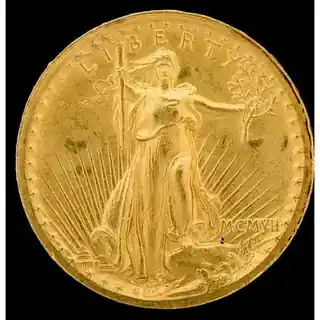
In 1904 President Theodore Roosevelt said plainly that he disliked the artistic state of American coinage, and he wanted the sculptor Augustus Saint-Gaudens to redo all of it. An 1890 law stood in the way: coin designs could not be changed until they had been in use twenty-five years, unless Congress authorised it. That left the cent and the four gold pieces eligible.
Saint-Gaudens designed the eagle and the double eagle, which entered circulation in 1907, the year he died. The cent, quarter eagle and half eagle were designed by other artists and released by 1909. Bela Pratt's 1908 designs for the half eagle and quarter eagle, with their sunken relief, gave American coinage a realistic portrait of a Native American, the only one before Fraser's Buffalo nickel.
The denominations are worth learning because collectors still use them: the quarter eagle is $2.50, the half eagle $5, the eagle $10, and the double eagle $20.
Modern bullion
The American Buffalo gold coin, first struck in 2006, was the Mint's first pure gold coin for investors and collectors, and it uses a modification of Fraser's original Type I nickel design. The American Eagle series runs alongside it. Both are sold at a premium over the metal, and both are struck in enormous quantities: they are not rare, and no dealer should tell you otherwise.
The rule that saves beginners money
With pre-1933 gold, you are buying a coin, and grade and rarity drive the price. With modern bullion, you are buying metal, and the only questions are weight, fineness, and the premium. Anyone selling a common modern bullion coin as a rare collectable, or selling a worn common-date double eagle at a rarity premium, is relying on you not knowing which world you are in. Our guide on how to buy coins covers the rest.
Storage and handling
Gold is soft. It marks if you handle it carelessly, and a hairline scratch on a mint state coin costs real money. Hold it by the edge, over a soft surface, and never clean it. The general rules are in how to store coins, and they apply to gold with more force than to anything else.