Coin type
Cents and Early Copper
Lincoln cents, wheat pennies, and the early copper that built American coin collecting.
Reviewed July 2026 · The Coin Register
The cent is where most American collections start, and where American numismatics itself effectively began. The Lincoln cent has been struck by the United States Mint every year since 1909, making it the longest-running design in the country's coinage. Before it came the large cents, the heavy copper pieces of the late 1700s and early 1800s that the first serious American collectors studied variety by variety.
The Lincoln cent
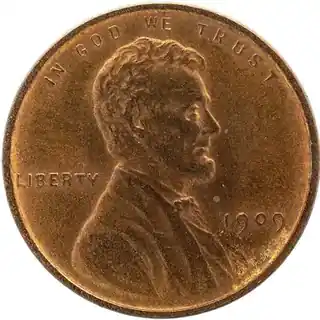
The obverse portrait of Abraham Lincoln was designed by Victor David Brenner, who also cut the original reverse: two stalks of wheat framing the denomination. That reverse ran from 1909 to 1958, which is why collectors call those coins wheat pennies. Later reverses followed, and the cent now carries a Union shield designed by Lyndall Bass in 2010.
Brenner's initials, VDB, appeared on the reverse of the earliest 1909 cents and were then removed. They did not return until 1918, when they were placed discreetly on the cutoff of Lincoln's bust, where they remain. That small removal produced the most famous coin in the series, the 1909-S VDB, and it is covered in our guide to key date coins.
What the cent is made of
| Years | Composition | Mass |
|---|---|---|
| 1909-1942, 1944-1982 | 95% copper, remainder tin or zinc | 3.11 g |
| 1943 | Zinc-plated steel | 2.7 g |
| 1982-present | Copper-plated zinc (97.5% Zn, 2.5% Cu) | 2.5 g |
The 1943 steel cent is the one everybody remembers: copper was needed for the war, so for a single year the cent was struck in zinc-plated steel. It is also the reason a magnet is the fastest first test on any 1943 cent someone tells you is copper.
Cent mint marks sit under the date on the obverse. The Mint used D and S, added a P for 2017 only, and a W for 2019 only. No mint marks appear on any cent dated 1965 through 1967, and the cent is the one denomination that never carries a P in ordinary years. We untangle that in coins with no mint mark.
Early American copper
The large cents matter out of all proportion to their face value. When Dr. William Herbert Sheldon set out to rank the condition of large cents in his 1949 book Early American Cents, 1793-1814, he devised a numbered scale from 1 to 70 and called it "A Quantitative Scale for condition." The American Numismatic Association later adapted it for all United States coins. Every modern grade, from G-4 to MS-70, descends from an attempt to grade copper cents. See the coin grading scale.
Early copper remains a specialist's field, studied by die variety rather than merely by date, and its collectors are among the most exacting in the hobby. The resources page points to the society that serves them.